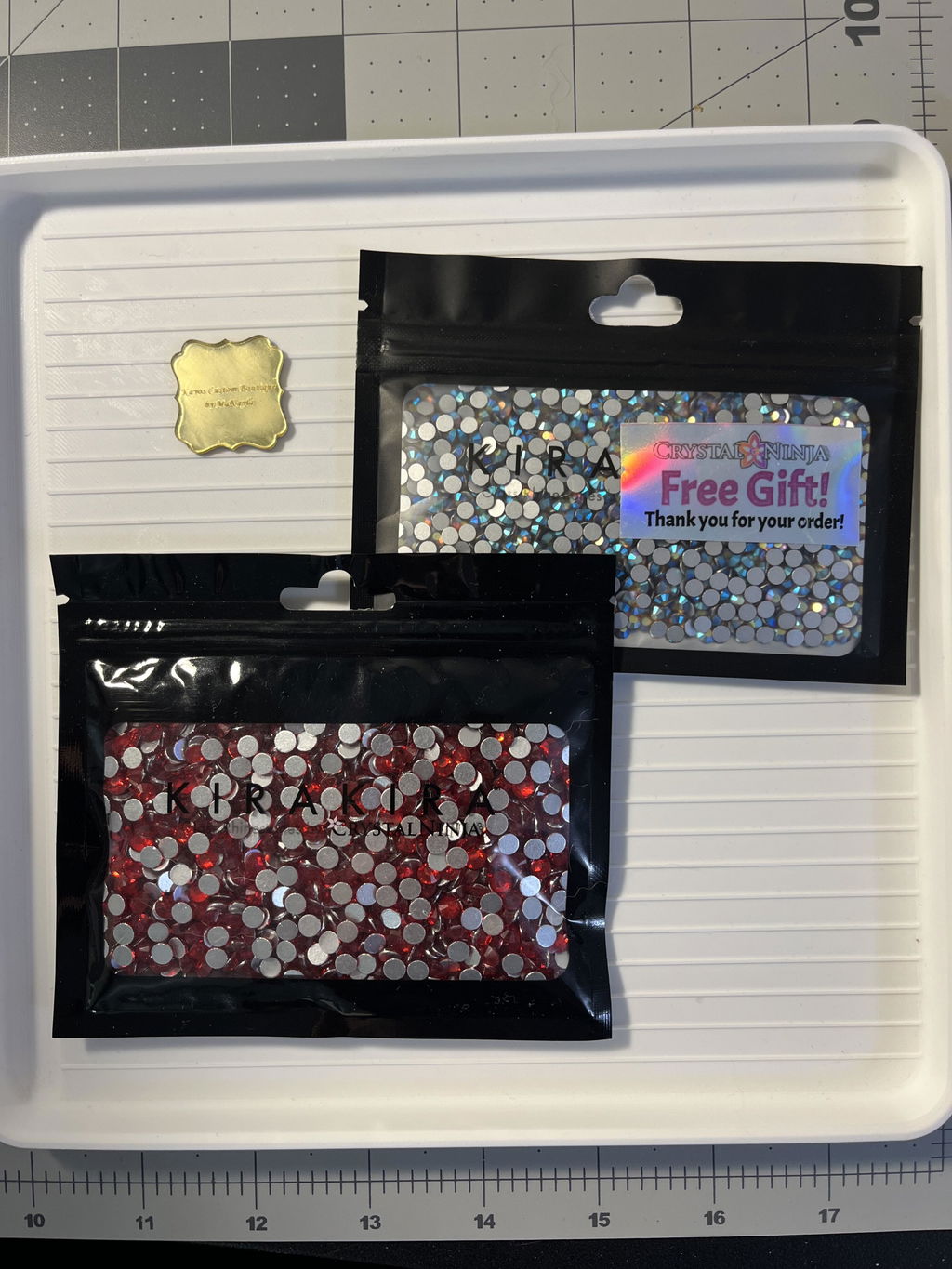
Let's talk about the thing that makes crystal artists squirm: money. Specifically, how fast it disappears when you buy stones for professional work. If you are not tracking expenses, you will be underwater on a project faster than you can say Crystal AB.
The lesson I paid for
On an international client project, a run of crystallized wooden dolls, I forgot to include the hand-drilling in my quote. Every doll needed its eye sockets drilled by hand to seat a crystal eyeball, hours each. I ate three to four days of unbilled labor. Twenty years in, and the tuition bills still arrive sometimes. lol.
Where the money goes
The stones are the obvious cost, and tier pricing multiplies fast across a big surface. But watch the sneaky ones too:
- Price per stone vs. price per project. A stone with consistent sizing and reliable adhesion saves waste and fix time. Cheap per stone, expensive per project. Math is rude like that.
- Adhesive. Good glue is not cheap, and testing two glues head to head on one project pays for itself.
- Tools. Your Crystal Katana, replacement tips, magnification, cleaning supplies. Real costs, so put them in your pricing.
- Time. The one everyone underestimates. On the Gisou run of 200+ bottles, five minutes saved per bottle was over 16 hours across the run. That is real money.
Know your numbers, and measure first
Here is the truth underneath every budget: you cannot price what you have not measured. Measurements are the most important part of this whole conversation. Guessing your stone count is how artists lose money on every single job.
Before I quote anything, I know these numbers cold:
- Surface area. Measure the actual area you are covering, in square inches or square centimeters. Not a guess. A measurement.
- Stone size. An SS16 covers a very different footprint than an SS30. Your size choice changes your count by thousands on a big piece.
- Fill pattern. A tight honeycomb uses more stones per square inch than a sprinkle fill. Same area, wildly different count.
- Stones per square inch. Once you know size and pattern, you know your density, and density times area is your real stone count.
Get those four right and your material cost stops being a guess and becomes a fact. That is the difference between a quote that protects you and a quote that quietly eats your profit.
Let the math do the measuring
You do not have to run this math by hand anymore. I built the RhinestoneRuler app to do exactly this: measure your area, pick your stone size and fill, and get your count and coverage instantly. It is the tool I wish I had on that doll project. Watch it work:
You can access RhinestoneRuler through the Sparkler membership at RhinestoneArtist.com. Join Sparkler and start measuring like a pro.
Want to truly master patterns, math, and pricing?
The app gives you the numbers. The Rhinestone Ruler Cube course teaches you the whole system behind them. It is by far my best class for this, the one that finally makes full fill patterns, the math, and confident pricing click into place. If numbers have ever intimidated you, this is the class that fixes it. Take the Rhinestone Ruler Cube course.
How I budget a client project
Exact stone count for the coverage and fill pattern, measured, never guessed. Add adhesive. Estimate labor and multiply by a rate that respects your skill. Then add margin for waste, mistakes, and surprises, because something unexpected always happens. Always.
Buy smart
Bulk-buy your staples when pricing is good. Build loyalty with reliable suppliers. Sample before any big order from a new source. The cheapest crystal is almost never the best value. Budget wisely, price confidently, and never apologize for charging what your work is worth.
Stock your staples with KiraKira glass rhinestones at crystalninja.com. Want the full business side, pricing and all? Join VIP at RhinestoneArtist.com.